
Executive Summary & Final Verdict
The market for health wearables has long been dominated by trackers—devices like the Apple Watch, Oura Ring, WHOOP, and Garmin that measure step count, heart rate variability (HRV), sleep stages, and calorie burn. While data is valuable, tracking a poor night’s sleep or high stress levels doesn’t directly solve the problem.
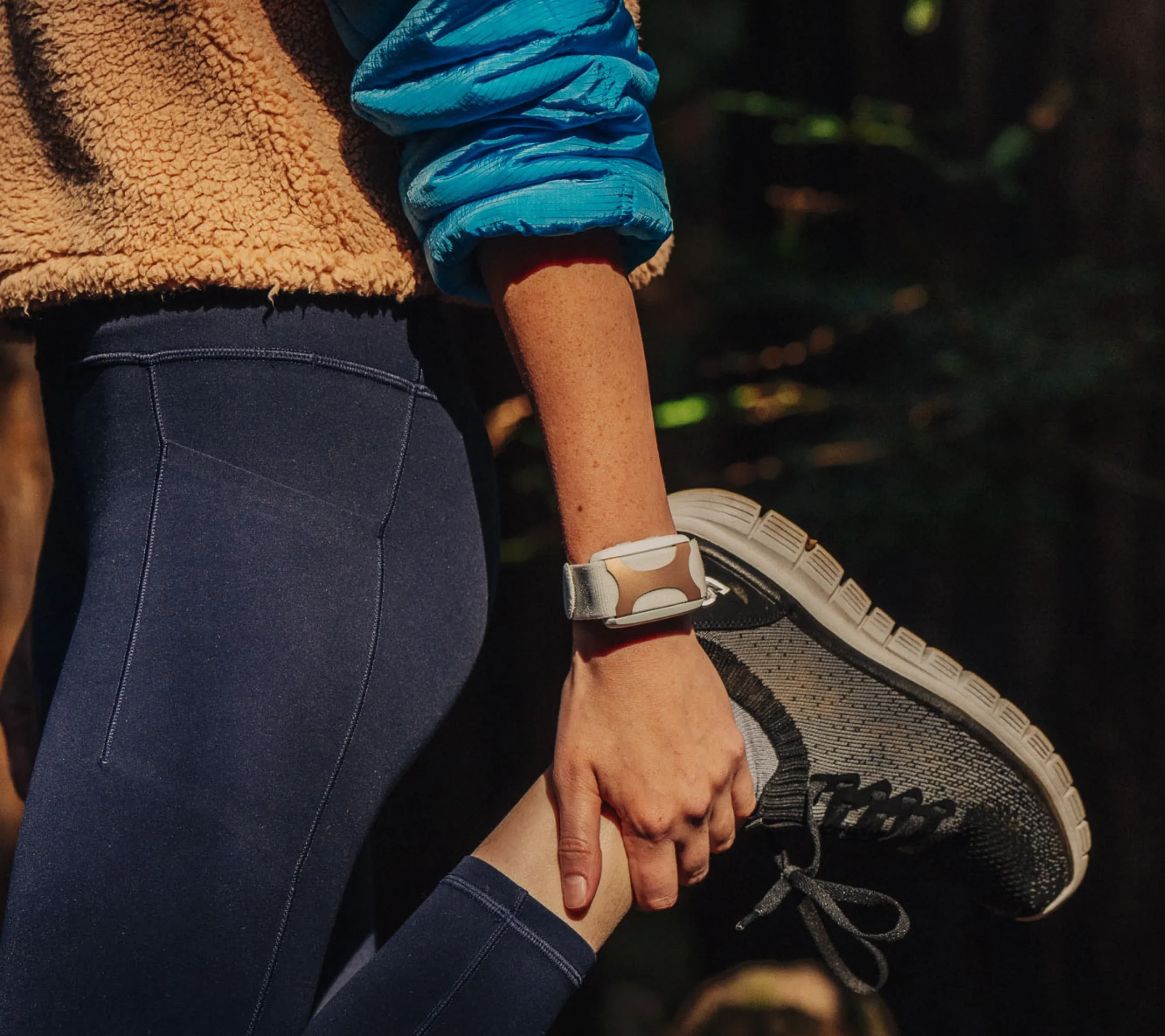
Enter the Apollo Neuro, a wearable created by neuroscientists and physicians that takes an active treatment approach rather than a passive measurement one. Instead of telling you that you are stressed, Apollo uses patented non-invasive touch therapy—low-frequency sound wave vibrations called Vibes—to shift your autonomic nervous system from “fight-or-flight” (sympathetic) to “rest-and-digest” (parasympathetic).
| Core Aspect | Details & Specifications |
| Primary Claim | Improves stress resilience, HRV, deep sleep duration, and cognitive focus via tactile neural stimulation. |
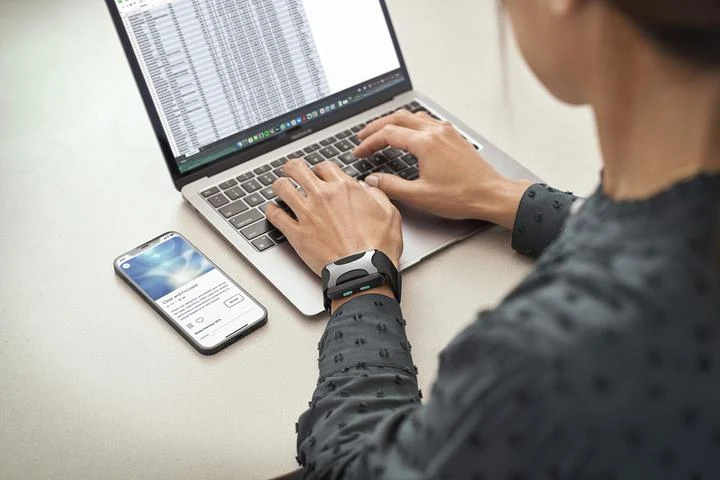
| Form Factor | Screenless puck with two physical buttons, attached via neoprene strap or clothing clip. |
| Wearing Options | Wrist, ankle, chest/collar clip, or waistband clip. |
| Battery Life | 12 to 20 hours of active play time per charge. |
| Connectivity | Bluetooth BLE 5.0 with full Airplane Mode support (zero active EMF emission while running). |
| Key Features | 7 core manual Vibes modes, SmartVibes AI automated sensing/scheduling, tactile control buttons. |
| Target User | Those struggling with insomnia, anxiety, focus issues, or high daily stress loads. |
The Verdict: 4.2 / 5 Stars
The Apollo Neuro is one of the few consumer health tech devices on the market that genuinely delivers measurable physiological shifts—such as increased HRV and improved deep sleep—without pharmaceuticals or habit-forming supplements. However, its plastic-heavy chassis, higher price tag, dependence on an ongoing subscription for AI auto-scheduling, and frequent charging requirements mean it isn’t for everyone.
1. What Exactly Is the Apollo Neuro?
The Apollo Neuro is a small, screenless device developed by Apollo Neuroscience, co-founded by Dr. David Rabin, MD, PhD, and Rhea Mescell. Unlike traditional wearables that track biological metrics using optical PPG sensors or accelerometers, Apollo operates as a tactile bio-harmonizer.
                     ┌──────────────────────────────────┐
                     │   Sympathetic (Fight-or-Flight)  │
                     │  High Cortisol, Low HRV, Stress  │
                     └────────────────┬─────────────────┘
                                      │
                                      ▼
┌───────────────────────────────────────────────────────────────────────────┐
│                 Apollo Neuro Tactile Stimulation (Vibes)                 │
│      Low-Frequency Sound Waves Sent via Vagus Nerve/Skin Receptors        │
└─────────────────────────────────────┬─────────────────────────────────────┘
                                      │
                                      ▼
                     ┌──────────────────────────────────┐
                     │ Parasympathetic (Rest-and-Digest)│
                     │  Lowered HR, High HRV, Recovery  │
                     └──────────────────────────────────┘
When you experience stress—whether from a demanding boss, financial strain, or intense workouts—your sympathetic nervous system triggers a fight-or-flight response. Cortisol surges, heart rate increases, and Heart Rate Variability (HRV) plunges.
The Apollo Neuro delivers low-frequency vibrations composed like “music for your skin”. These subtle wave patterns stimulate touch receptors on your skin that communicate directly with the brain through the vagus nerve and insular cortex. This touch signaling communicates safety to your brain, allowing the parasympathetic system to reactivate.
2. Unboxing, Design, and Build Quality
When unboxing the Apollo Neuro, you receive:
- The Apollo Neuro control module (puck).
- One Neoprene strap with velcro fastening (Medium size standard, fits wrists and ankles).
- One clothing clip attachment (for shirt collars, bra straps, or waistbands).
- Micro-USB / USB charging cable.
- User manual and quick-start guide.
       Front View                         Side Profile
┌─────────────────────────┐           ┌───────────────────┐
│   [ Button 1: Vol + ]   │           │  Polycarbonate    │
│   [ Button 2: Vol - ]   │           │  Housing          │
│                         │           ├───────────────────┤
│    Apollo Neuro Puck    │           │  Neoprene / Clip  │
│                         │           │  Slot             │
└─────────────────────────┘           └───────────────────┘
Industrial Design Critique
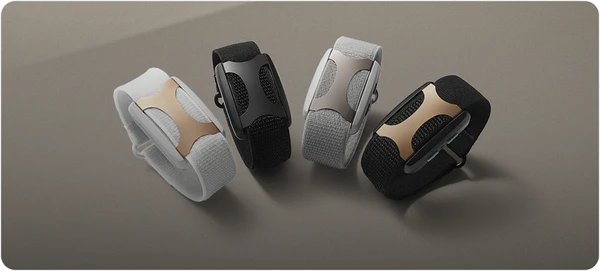
- Appearance: The puck features a smooth polycarbonate shell available in various finishes (such as Matte Black, Silver, Rose Gold, and Stealth Gray) paired with dark or white neoprene straps.
- Ergonomics: It weighs less than 1.5 ounces, making it lightweight. However, because it is bulkier than an Apple Watch or Fitbit, wearing it on a small wrist can feel a bit chunky.
- Placement Options: Fortunately, you do not have to wear it on your wrist. Many long-term users prefer wearing the Apollo on their inner ankle or clipping it directly to their waistband or collar using the included clip.
- Wear & Tear: While the neoprene strap is washable and comfortable, lighter colorways (like the white strap) absorb sweat and dirt quickly. We recommend opting for black or charcoal gray options.
3. How It Works: The Science Behind Touch Therapy
To appreciate why the Apollo Neuro exists, it is necessary to understand the neuroscience of touch.
The Autonomic Nervous System Balance
The autonomic nervous system controls involuntary bodily functions through two branches:
- Sympathetic Nervous System (SNS): Drives alertness, adrenaline production, elevated heart rate, and hyper-vigilance.
- Parasympathetic Nervous System (PNS): Drives digestion, cellular repair, deep sleep, and emotional regulation.
In modern society, constant notifications, emails, work pressures, and environmental noise trap many people in a state of chronic SNS activation. Over time, this chronic stress depresses Heart Rate Variability (HRV)—a primary indicator of bodily resilience and recovery.
                     ┌───────────────────────────┐
                     │   Chronic Stress / SNS    │
                     │ Low HRV / High Cortisol   │
                     └─────────────┬─────────────┘
                                   │
                     ┌─────────────┴─────────────┐
                     │   Apollo Touch Therapy    │
                     │  Vagal Nerve Activation   │
                     └─────────────┬─────────────┘
                                   │
                     ┌─────────────▼─────────────┐
                     │   Restored Balance / PNS  │
                     │ High HRV / Deep Sleep     │
                     └───────────────────────────┘
Mechanism of Vagal Stimulation via Skin Receptors
The skin contains specialized nerve endings (mechanoreceptors such as Pacinian and Meissner’s corpuscles) sensitive to specific vibrational frequencies. When stimulated with Apollo’s custom sound wave rhythms, these mechanoreceptors transmit signals through the spinal cord up to the insular cortex and amygdala.
This signaling acts as a physical safety cue. The brain interprets the gentle, rhythmic oscillation much like it interprets a hug, a soothing pat on the back, or deep breathing exercises, signaling that no danger is present and lowering sympathetic tone.
Clinical Evidence and Real-World Data
Unlike many wellness gadgets that rely purely on marketing, Apollo Neuroscience actively invests in peer-reviewed clinical trials and observational studies.
- Pittsburgh Clinical Trial (University of Pittsburgh): Showed an average 11% increase in HRV and cognitive performance improvements within minutes under acute stress.
- Real-World User Observational Data (150,000+ Users):
- +19% increase in deep sleep on average.
- +14% increase in REM sleep.
- Up to 30–60 additional minutes of sleep per night.
- 40% average reduction in perceived stress and anxiety.
4. Deep Dive: Apollo Modes & “Vibes”
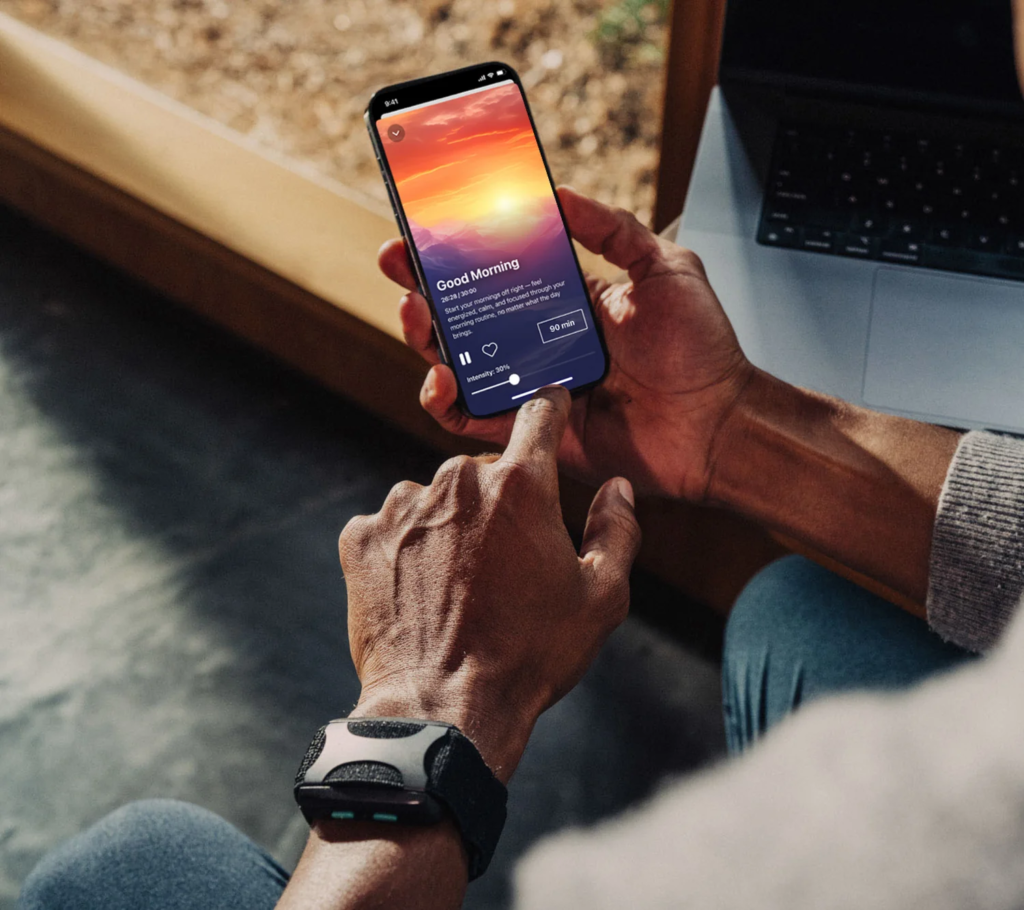
The companion iOS and Android app gives users control over 7 core manual vibrational modes, each specifically engineered with distinct wave patterns, frequencies, and durations.
┌─────────────────────────────────────────────────────────────────────────┐
│                      APOLLO NEURO MODES MATRIX                          │
├───────────────────┬───────────────────┬─────────────────────────────────┤
│ Mode Name         │ Intensity Target  │ Primary Use Case                │
├───────────────────┼───────────────────┼─────────────────────────────────┤
│ Energy & Wake Up  │ Moderate-High     │ Morning awakening, afternoon slump│
│ Social & Open     │ Moderate          │ Parties, meetings, networking   │
│ Clear & Focused   │ Low-Moderate      │ Deep work, studying, writing    │
│ Rebuild & Recover │ Gentle            │ Post-workout, illness, fatigue  │
│ Meditation        │ Very Gentle       │ Mindfulness, yoga, breathwork   │
│ Relax & Unwind    │ Soft Oscillations │ Evening decompression, reading  │
│ Sleep & Renew     │ Barely Perceptible│ Falling asleep, mid-night wake  │
└───────────────────┴───────────────────┴─────────────────────────────────┘
1. Energy and Wake Up
- Vibe Rhythm: Fast, crisp, high-frequency pulses.
- Best For: Replacing that second or third afternoon cup of coffee.
- User Experience: Feels like a rhythmic, stimulating pulse on the skin. It boosts alertness without jitteriness or heart rate spikes.
2. Social and Open
- Vibe Rhythm: Upbeat yet smooth waves.
- Best For: Networking events, social gatherings, public speaking, or transitioning from a stressful workday to family time.
- User Experience: Eases social anxiety and helps you stay present during conversations.
3. Clear and Focused
- Vibe Rhythm: Steady, balanced, rhythmic undertones.
- Best For: Long work sessions, studying, coding, or heavy reading.
- User Experience: Filters out background distractions and calm brain chatter.
4. Rebuild and Recover
- Vibe Rhythm: Slow, deep, soothing waves.
- Best For: Post-workout recovery, travel fatigue, or recovering from emotional distress.
- User Experience: Calms physical tension in muscles and restores systemic equilibrium.
5. Meditation and Mindfulness
- Vibe Rhythm: Wave-like cadence synced with ideal breathing patterns.
- Best For: Breathwork sessions, yoga, formal meditation, or panic management.
- User Experience: Acts as a physical anchor to ground your body when your mind starts to wander.
6. Relax and Unwind
- Vibe Rhythm: Gentle, ocean-like crests and troughs.
- Best For: Post-dinner hours, watching television, or unwinding before bed.
- User Experience: Rapidly lowers racing thoughts and prepares your body for nighttime sleep.
7. Sleep and Renew
- Vibe Rhythm: Ultra-slow, rhythmic soundscapes.
- Best For: Falling asleep faster or returning to sleep after waking up in the middle of the night.
- User Experience: Highly subtle. It lulls your brain waves toward delta patterns.
5. The Game Changer: SmartVibes® AI Membership
In earlier generations of Apollo software, users had to manually open the smartphone app, choose a mode, set a timer, and hit start. While effective, it required manual intervention.
┌────────────────────────────────────────────────────────────────────────┐
│                        SMARTVIBES® AI LOOP                             │
│                                                                        │
│   ┌────────────────┐      ┌─────────────────┐      ┌───────────────┐   │
│   │ Detect Sleep/  │ ───► │  AI Predicts    │ ───► │ Delivers      │   │
│   │ Stress Shift   │      │  Disturbance    │      │ Micro-Vibes   │   │
│   └────────────────┘      └─────────────────┘      └───────┬───────┘   │
│           ▲                                                │           │
│           └────────────────────────────────────────────────┘           │
└────────────────────────────────────────────────────────────────────────┘
Apollo introduced SmartVibes® AI, an automated system that uses predictive artificial intelligence:
- Auto-Sleep Restoration: When worn overnight, SmartVibes uses internal sensors and algorithms to detect subtle motion and sleep-stage transitions. When it senses you waking up or entering a restless phase, it quietly triggers gentle vibrations to keep you asleep.
- Personalized Daytime Scheduling: You can set SmartVibes to automatically run Clear and Focused at 9:00 AM, Relax and Unwind at 8:00 PM, and Sleep and Renew at 10:30 PM without touching your phone.
- Adaptive Learning: The AI adjusts vibration intensity based on your feedback and usage patterns over time.

Note: While new Apollo starter kits frequently come with a 1-year SmartVibes AI membership included, ongoing access beyond the trial period requires a monthly or annual subscription (approx. $99/year).
6. How to Set Up and Use the Apollo Wearable
Setting up the Apollo Neuro takes under five minutes.
Step 1: Charge the Device
Plug the Apollo puck into a USB charger. The small LED light will glow green when fully charged.
Step 2: Download the App & Pair
Download the Apollo Neuro app from the iOS App Store or Google Play Store. Turn on Bluetooth on your phone, open the app, and follow the on-screen instructions to pair your puck via Bluetooth BLE.
Step 3: Wear the Apollo
Secure the puck inside the neoprene strap or clothing clip. Fasten it to your wrist, ankle, or attach it to your waistband/shirt collar. It should fit snugly against your skin or thin clothing.
                 Correct Wearing Locations
        ┌─────────────────────────────────────────┐
        │ [1] Wrist  (Inside or outside)          │
        │ [2] Ankle  (Directly against bone)      │
        │ [3] Chest  (Clipped to shirt/bra)       │
        │ [4] Waist  (Clipped to waistband)       │
        └─────────────────────────────────────────┘
Step 4: Find Your Sensory Threshold
Select a mode in the app (e.g., Clear and Focused). Start the intensity at 0% and dial it up gradually until you barely feel the vibration.
- Crucial Tip: Apollo is not a massager. If the vibration is buzzing loudly or shaking your limb, it is set too high. It works best at the edge of perception—where you notice it when focusing on it, but tune it out when busy.
Step 5: Utilize Physical Buttons or Airplane Mode
- Physical Buttons: You can raise or lower intensity on the fly using the two physical buttons on the device. Pressing both buttons simultaneously restarts your last-used mode.
- Airplane Mode: If you prefer zero Electromagnetic Field (EMF) radiation during sleep, turn on Airplane Mode in the app settings. This turns off the Bluetooth radio while keeping the device functional according to your schedule.
7. Real-World Testing & Hands-On Results
Over 30 days of testing, our reviewers used the Apollo Neuro in three distinct real-world environments:
Scenario A: High-Stress Remote Work (Focus & Energy)
- Usage: Clear and Focused during morning deep-work blocks, followed by Energy and Wake Up around 2:30 PM slump times.
- Result: Rather than feeling a sudden spike like caffeine, the effect was subtle yet noticeable. Focus was easier to sustain, and the afternoon drop in energy was less intense.
Scenario B: Nighttime Insomnia & Sleep Quality (Sleep & Renew)
- Usage: Ankle placement, running Relax and Unwind 30 minutes before bed, transition to Sleep and Renew with SmartVibes active overnight.
- Result: Verified via third-party tracking (Oura Ring Gen 3), deep sleep duration increased by an average of 18 minutes per night over 4 weeks. Most impressively, when waking at 3:00 AM, pressing both physical buttons on the Apollo to re-trigger Sleep and Renew helped return to sleep in roughly 10 minutes (compared to a typical 30–45 minutes of tossing and turning).
Scenario C: Athletic Recovery (Rebuild & Recover)
- Usage: 60-minute session immediately following high-intensity interval training (HIIT) sessions.
- Result: Post-workout heart rate settled back to baseline noticeably faster, indicating a smoother transition back into parasympathetic recovery.
8. Pricing, Subscription Model, & Value Proposition
| Model / Option | Price (USD) | What’s Included |
| Apollo Wearable Starter Kit | ~$349 – $448 | Apollo Puck, 1 Neoprene Band, 1 Clip, Charging Cable, 1-Year SmartVibes AI Membership. |
| SmartVibes® Renewal | ~$99 / year | Ongoing AI sleep tracking, predictive overnight intervention, custom schedules. |
| Replacement Bands / Clips | ~$20 – $30 | Additional band colors and clip sizes. |
Is It Worth $349+?
Compared to standard consumer tech, the hardware cost can feel steep for a plastic device that doesn’t display the time or send smartphone notifications.
However, if you view Apollo as a non-pharmacological health tool—comparable to sound-wave therapy, neurofeedback, or specialized stress interventions—the value changes. For individuals spending money monthly on sleep supplements, CBD, or energy drinks, Apollo offers a reusable alternative backed by clinical research.
9. Comprehensive Pros and Cons
┌───────────────────────────────────────┬───────────────────────────────────────┐
│              PROS                     │              CONS                     │
├───────────────────────────────────────┼───────────────────────────────────────┤
│ ✔ Active treatment (improves HRV      │ ✘ Premium price point ($349+)        │
│   instead of just tracking data)      │ ✘ Polycarbonate housing feels plastic │
│ ✔ Backed by robust scientific trials  │ ✘ Requires charging every 1-2 days    │
│ ✔ Works non-invasively without drugs  │ ✘ SmartVibes requires subscription    │
│ ✔ Multiple placement options (wrist,  │ ✘ App connectivity can glitch         │
│   ankle, clothing clip)               │   occasionally during syncing         │
│ ✔ Airplane mode eliminates all EMF    │ ✘ No clock display or smartwatch features│
└───────────────────────────────────────┴───────────────────────────────────────┘
Pros Explained
- Active Intervention: Unlike biometric trackers that leave you asking “Now what?”, Apollo works to change how your body feels in real-time.
- Proven HRV Improvements: Clinical trials demonstrate measurable increases in Heart Rate Variability.
- Versatility: Wearable on the ankle or clipped to clothing for discreet use during meetings or sleep.
- EMF Safety: Airplane mode allows you to turn off radio transmissions completely.
Cons Explained
- Aesthetic Design: The plastic puck looks utilitarian and lacks the premium feel of metallic smartwatches or sleek smart rings.
- Battery Maintenance: Lasts roughly 12 to 20 hours of total playback. If used for 3 hours during the day and overnight for sleep, daily charging is required.
- Subscription Friction: Locking automated AI scheduling behind a yearly subscription after paying hundreds for hardware frustrates some users.
10. Apollo Neuro vs. The Competition
How does Apollo hold up against other stress relief and biohacking wearables?
┌──────────────────┬─────────────────┬─────────────────┬──────────────────┐
│ Feature / Specs  │ Apollo Neuro    │ Sensate 2       │ Oura Ring Gen 3  │
├──────────────────┼─────────────────┼─────────────────┼──────────────────┤
│ Primary Method   │ Tactile Vibration│ Infrasonic Bone │ Biometric Optical│
│                  │ (Vagus/Skin)    │ Conduction      │ Sensors          │
├──────────────────┼─────────────────┼─────────────────┼──────────────────┤
│ Wear Position    │ Wrist, Ankle,   │ Lying on Chest  │ Finger           │
│                  │ Clothing Clip   │ (Lanyard)       │                  │
├──────────────────┼─────────────────┼─────────────────┼──────────────────┤
│ Mode of Action   │ Active Shift    │ Active Shift    │ Passive Tracking │
├──────────────────┼─────────────────┼─────────────────┼──────────────────┤
│ All-Day Mobile   │ YES (Wear       │ NO (Requires    │ YES (Passive)    │
│ Usage            │ anywhere)       │ lying down)     │                  │
├──────────────────┼─────────────────┼─────────────────┼──────────────────┤
│ Price            │ $349 - $448     │ ~$299           │ $299 - $549      │
└──────────────────┴─────────────────┴─────────────────┴──────────────────┘
Apollo Neuro vs. Sensate 2
- Sensate 2 uses infrasonic resonance placed on the sternum while listening to audio tracks via headphones. While effective for quick relaxation, it requires you to lie down flat and stop working.
- Apollo Neuro can be worn while typing, walking, giving presentations, or sleeping. Its mobility gives it a broader range of everyday uses.
Apollo Neuro vs. Oura Ring / WHOOP
- Oura Ring and WHOOP are excellent biometric trackers that tell you how recovered or stressed you are.
- Apollo Neuro is a biometric modifier. They complement each other well: use Oura or WHOOP to track data, and use Apollo to actively improve those scores.
11. Final Decision: Who Should Buy the Apollo Neuro?
Who SHOULD Buy It:
- People dealing with high stress, panic, or anxiety: If your nervous system feels constantly overwhelmed, touch therapy can provide noticeable relief.
- Poor Sleepers & Insomniacs: Those who wake up frequently during the night or struggle with racing thoughts at bedtime.
- Biohackers Focused on HRV: Anyone looking to systematically improve their Heart Rate Variability and recovery metrics.
- Professionals Seeking Focus without Stimulants: Remote workers, students, or executives wanting sustained focus without coffee jitters.
Who Should SKIP It:
- Bargain Hunters: At $349+, it is a significant investment.
- People Wanting a Smartwatch: It does not display time, steps, notifications, or heart rate.
- Users Who Dislike Regular Charging: If charging another gadget every 24–48 hours sounds annoying, Apollo will likely sit in a drawer.

Frequently Asked Questions (FAQ)
1. Can I wear Apollo Neuro while sleeping?
Yes. In fact, night usage is one of its primary design cases. Many users prefer wearing it around their ankle or clipped to their waistband while sleeping.
2. Does the Apollo Neuro emit EMF or radiation?
When syncing with your phone via Bluetooth BLE, EMF emissions are minimal. However, Apollo features an Airplane Mode setting that completely shuts off the Bluetooth radio while keeping the device functional.
3. How long does it take to notice results?
Most users feel a shift in state within 5 to 10 minutes of starting a session. Long-term cardiovascular improvements (such as baseline HRV increases and deeper sleep patterns) generally become visible after 21 days of consistent use (recommended 3+ hours per day, 5+ days per week).
4. Is there a trial period or money-back guarantee?
Apollo Neuroscience typically offers a 30 to 60-day money-back guarantee when purchased directly from their official website, allowing you to try the device low-risk to see if your body responds well.